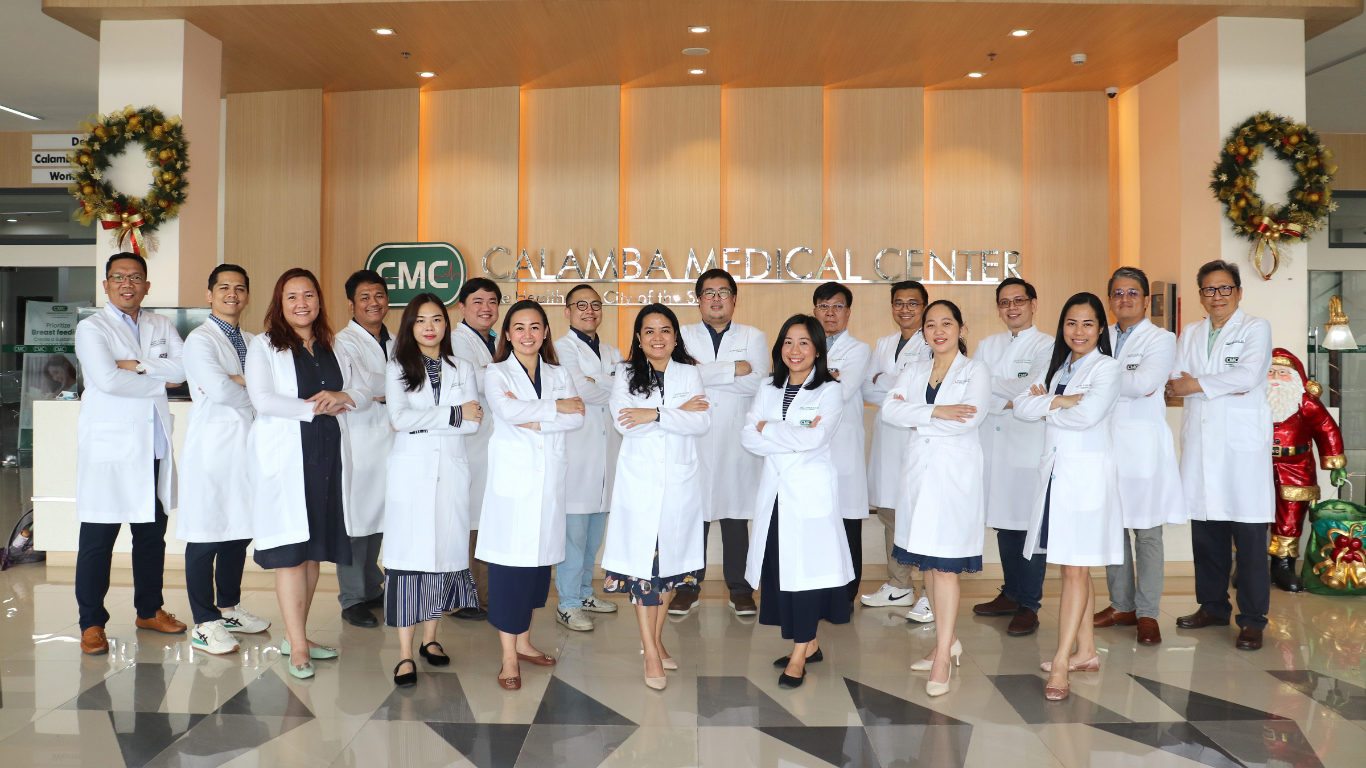
Department of Surgery
Calamba Medical Center’s Department of surgery offers a comprehensive range of surgical services, encompassing both major and minor procedures. The department operates 24/7, ensuring that patients have access to surgical care anytime.
Contact Information
Telephone Number: (049) 545-1740
Cell phone Number: 0920-965-6060 , 0920-974-4994
Email Address: medicalaffairsstaff@cmc.ph
Department Chair: Paul Michael Galicia, MD
Location: CMC, Tower 2, Medical Arts Building Tower 1, Crossing Brgy. Real Calamba City Laguna 4027 Philippines
Services Offered
General Surgery
Includes the diagnosis, preoperative, operative, and postoperative care of patients with a wide range of surgical conditions. General surgeons are trained to operate on several key systems and perform both elective and emergency procedures.
Gastrointestinal Surgery
- Esophagus, stomach, small and large intestines (e.g., bowel resection, appendectomy, hernia repair)
- Gallbladder and biliary tract (e.g., cholecystectomy)
- Liver, pancreas, and spleen surgeries
Hernia Repair
- Inguinal, umbilical, incisional, and femoral hernias (open and laparoscopic repair)
Breast Surgery
- Biopsy, lumpectomy, mastectomy, axillary dissection for benign and malignant diseases
Endocrine Surgery
- Thyroidectomy, parathyroidectomy, adrenalectomy
Colorectal Surgery
- Hemorrhoidectomy, fistula/fissure surgery, colectomy for benign or malignant conditions
Trauma Surgery
- Management of soft tissue injuries, abdominal trauma (e.g., splenectomy, laparotomy), and emergency stabilization
Minimally Invasive and Laparoscopic Surgery
- Laparoscopic appendectomy, cholecystectomy, hernia repair, diagnostic laparoscopy
Oncologic Surgery
- Resection of tumors in various organs (e.g., colon cancer, breast cancer)
- Surgical staging and biopsy procedures
Soft Tissue Surgery
- Excision of benign and malignant skin or subcutaneous tumors (e.g., lipomas, cysts)
- Incision and drainage of abscesses
Vascular Access and Minor Vascular Surgery
- Insertion of central venous catheters, arteriovenous fistula creation for dialysis.
- Management of peripheral vascular injuries (non-complex)
Minimally Invasive Surgery (MIS)
Encompasses a broad range of diagnostic and therapeutic procedures performed with minimal incisions, leading to reduced trauma, faster recovery, and fewer complications compared to traditional open surgery. Here’s a structured overview of the scope of services:
Diagnostic Services
Therapeutic and Surgical Interventions
Neurosurgery
Day-care and Ambulatory Procedures
Surgical Oncology
- Diagnostic and Staging Services
- Curative Surgical Treatments
- Palliative Surgical Procedures
- Reconstructive Surgery (In Collaboration)
- Advanced and Specialized Techniques
- Multidisciplinary Care and Tumor Board Participation
- Follow-Up and Survivorship Care
Colorectal Surgery
- Diagnostic and Evaluation Services
- Surgical Treatment Services
- Minimally Invasive and Advanced Techniques
- Stoma Care and Support Services
- Multidisciplinary Cancer and IBD Care
- Follow-up and Surveillance
Vascular Surgery
- Diagnostic and Evaluation Services
- Arterial Disease Management
- Venous Disease Management
- Dialysis Access Surgery
- Trauma and Emergency Vascular Surgery
- Hybrid and Endovascular Procedures
- Multidisciplinary Care and Chronic Disease Management
- Preventive and Risk-Reduction Services
Hepatopancreaticobiliary (HPB) Surgery
Urologic Surgery
- Diagnostic and Evaluation Services
- Surgical Treatment Services
- Minimally Invasive and Endourological Techniques
- Oncologic Urology
- Functional Urology and Reconstruction
- Emergency Urologic Surgery
- Follow-Up and Long-Term Care
Thoraco-vascular Surgery
- Diagnostic and Preoperative Evaluation
- Cardiac Surgery
- Thoracic Surgery
- Emergency and Trauma Surgery
- Minimally Invasive and Advanced Techniques
- Multidisciplinary Care
- Follow-Up and Long-Term Care
Minimally Invasive Surgery (MIS)
Encompasses a broad range of diagnostic and therapeutic procedures performed with minimal incisions, leading to reduced trauma, faster recovery, and fewer complications compared to traditional open surgery. Here’s a structured overview of the scope of services:
Diagnostic Services
- Laparoscopy – Diagnostic examination of the abdomen or pelvis
- Thoracoscopy – Diagnostic assessment of the pleural cavity
- Endoscopy (e.g., GI endoscopy, bronchoscopy) – Visual inspection and biopsy of mucosal surfaces
Therapeutic and Surgical Interventions
- General Surgery
- Laparoscopic cholecystectomy (gallbladder removal)
- Laparoscopic appendectomy
- Hernia repairs (inguinal, hiatal, ventral)
- Colectomy (partial/total)
- Urologic Surgery
- Nephrectomy (partial or radical)
- Prostatectomy (radical)
- Ureteral reimplantation
- Kidney stone removal (via ureteroscopy or PCNL)
- Thoracic Surgery
- Lobectomy or wedge resection (for lung lesions)
- Pleurodesis
- Thymectomy
- Cardiac Surgery
- Minimally invasive valve repair/replacement
- Coronary artery bypass grafting (via small thoracotomy)
- Atrial septal defect closure
Neurosurgery
- Endoscopic third ventriculostomy (ETV)
- Pituitary tumor removal via transnasal endoscopy
- Microdiscectomy for herniated discs
Day-care and Ambulatory Procedures
- Diagnostic laparoscopy
- Arthroscopic debridement
Surgical Oncology
Encompasses the diagnosis, staging, treatment, and palliative care of patients with solid tumors using surgical methods. Surgical oncologists work as part of a multidisciplinary team to offer comprehensive cancer care, often in collaboration with medical and radiation oncologists.
Diagnostic and Staging Services
- Excisional/incisional biopsies
- Sentinel lymph node biopsy (SLNB)
- Diagnostic laparoscopy or thoracoscopy
- Staging laparotomy (rarely used now, replaced by imaging/minimally invasive techniques)
Curative Surgical Treatments
Procedures involving complete tumor removal with or without lymph node dissection:
- General Surgery
- Lumpectomy (breast-conserving surgery)
- Mastectomy (simple, modified radical, or radical)
- Axillary lymph node dissection / SLNB
- Oncoplastic surgery
- Gastrointestinal (GI) Cancers
- Colectomy (colon cancer)
- Proctectomy (rectal cancer)
- Gastrectomy (stomach cancer)
- Whipple procedure (pancreatic cancer)
- Liver resection (hepatic metastases or primary liver tumors)
- Head and Neck Cancers
- Glossectomy, mandibulectomy, neck dissection
- Thyroidectomy, parathyroidectomy
- Thoracic Cancers
- Lobectomy, pneumonectomy (lung cancer)
- Mediastinal mass excision
- Genitourinary Cancers
- Nephrectomy (kidney)
- Cystectomy (bladder)
- Prostatectomy (prostate cancer)
- Skin and Soft Tissue Cancers
- Wide local excision for melanoma/sarcoma
- Limb-sparing surgery
- Reconstruction (often with plastic surgery input)
Palliative Surgical Procedures
- To alleviate symptoms and improve quality of life in advanced-stage cancers:
- Bowel bypass or diversion (e.g., colostomy)
- Stenting (esophageal, biliary)
- Tumor debulking
Reconstructive Surgery (In Collaboration)
- Flap reconstruction after tumor resection (e.g., breast, head and neck)
- Functional preservation techniques (nerve-sparing, sphincter-saving)
Advanced and Specialized Techniques
- Minimally invasive cancer surgery (laparoscopic)
- Isolated limb perfusion for extremity sarcomas or melanoma
Multidisciplinary Care and Tumor Board Participation
- Surgical oncologists:
- Participate in tumor board discussions
- Coordinate care with radiology, pathology, medical oncology, radiation oncology, and palliative care
- Help develop individualized treatment plans
Follow-Up and Survivorship Care
- Postoperative surveillance for recurrence
- Management of surgical complications
- Long-term quality of life support (e.g., lymphedema, functional rehab)
Vascular Surgery
Encompasses the diagnosis, medical management, and surgical treatment of diseases affecting the arteries, veins, and lymphatic system, excluding the heart and intracranial vessels. Vascular surgeons offer both open surgical and minimally invasive endovascular procedures, often in collaboration with interventional radiologists and cardiologists.
Diagnostic and Evaluation Services
- Vascular surgeons assess and monitor vascular conditions using:
- Non-invasive vascular lab studies:
- Doppler ultrasound
- Ankle-brachial index (ABI)
- Pulse volume recordings (PVR)
- Imaging services:
- CT angiography (CTA)
- MR angiography (MRA)
- Conventional angiography
- Vein mapping and arterial mapping (for bypass planning or dialysis access)
Arterial Disease Management
- Peripheral Arterial Disease (PAD)
- Endovascular angioplasty and stenting
- Atherectomy
- Bypass surgery (e.g., femoropopliteal, femorodistal)
- Limb salvage procedures (for critical limb ischemia)
- Amputation (if unavoidable)
- Aneurysmal Disease
- Abdominal aortic aneurysm (AAA) repair: – Open aneurysmectomy and grafting – Endovascular aneurysm repair (EVAR)
- Thoracic aortic aneurysm repair (TEVAR)
- Peripheral aneurysm repair (popliteal, iliac, femoral)
- Carotid Artery Disease
- Carotid endarterectomy (CEA)
- Carotid artery stenting (CAS)
- Stroke prevention services
- Mesenteric and Renal Artery Disease
- Revascularization (bypass or stenting)
- Treatment of mesenteric ischemia (acute/chronic)
- Renal artery stenting (for hypertension/ischemic nephropathy)
Venous Disease Management
- Chronic Venous Insufficiency and Varicose Veins
- Endovenous ablation (laser or radiofrequency)
- Foam sclerotherapy
- Ambulatory phlebectomy
- High ligation and vein stripping (less common now)
- Deep Vein Thrombosis (DVT) and Pulmonary Embolism (PE)
- Anticoagulation and thrombolysis
- Surgical thrombectomy (selected cases)
- Inferior vena cava (IVC) filter placement/removal
- Venous Ulcers
- Multimodal wound care and surgical support
- Skin grafting or flap coverage in collaboration with plastic surgery
Dialysis Access Surgery
- Creation of arteriovenous (AV) fistulas and grafts
- AV access revision, thrombectomy, or salvage
- Tunneled dialysis catheter placement/removal
Trauma and Emergency Vascular Surgery
- Repair of arterial injuries (penetrating/blunt trauma)
- Vascular control and reconstruction in emergency settings
- Management of acute limb ischemia
Hybrid and Endovascular Procedures
- Use of hybrid operating rooms for complex cases
- Combined open and endovascular interventions (e.g., fenestrated EVAR)
- Use of stent grafts, coils, and embolization agents
Multidisciplinary Care and Chronic Disease Management
- Collaboration with cardiology, nephrology, neurology, and wound care teams
- Long-term follow-up for:
- Aneurysmal surveillance
- PAD progression
- Postoperative graft monitoring
Preventive and Risk-Reduction Services
- Smoking cessation programs
- Hypertension, lipid, and diabetes management
- Screening for abdominal aortic aneurysm (AAA) in at-risk populations
Hepatopancreaticobiliary (HPB) Surgery
Encompasses the diagnosis, medical management, and surgical treatment of diseases affecting the arteries, veins, and lymphatic system, excluding the heart and intracranial vessels. Vascular surgeons offer both open surgical and minimally invasive endovascular procedures, often in collaboration with interventional radiologists and cardiologists.
Breast Surgery:
Involves the diagnosis, surgical treatment, and follow-up care of benign and malignant breast diseases. Breast surgeons collaborate closely with radiologists, medical oncologists, radiation oncologists, pathologists, and plastic surgeons to provide comprehensive breast care.
Urologic Surgery:
Covers the diagnosis, medical and surgical management of diseases affecting the urinary tract and male reproductive organs. Urologic surgeons treat a wide range of conditions, from benign disorders to complex malignancies, using open, laparoscopic, robotic, and endoscopic techniques.
Diagnostic and Evaluation Services
- Physical examination including genital and rectal exams
- Urinalysis and urine culture
- Imaging: Ultrasound, CT urography, MRI, X-rays
- Cystoscopy and ureteroscopy
- Urodynamic studies
- Prostate biopsy (transrectal or transperineal)
- Stone analysis and metabolic evaluation
Surgical Treatment Services
- Kidney and Upper Urinary Tract
- Nephrectomy (partial and radical)
- Pyeloplasty (for ureteropelvic junction obstruction)
- Ureteral reimplantation and reconstruction
- Treatment of kidney stones (PCNL, ureteroscopy, SWL)
- Tumor resections (renal cell carcinoma, transitional cell carcinoma)
- Bladder Surgery
- Transurethral resection of bladder tumor (TURBT)
- Cystectomy (partial and radical) with urinary diversion (ileal conduit, neobladder)
- Bladder stone removal
- Treatment of bladder prolapse and fistulas
- Prostate Surgery
- Transurethral resection of the prostate (TURP)
- Open, laparoscopic, and robotic radical prostatectomy
- Laser prostatectomy
- Treatment of benign prostatic hyperplasia (BPH)
- Male Reproductive Surgery
- Vasectomy and vasectomy reversal
- Orchiectomy and testicular tumor surgery
- Varicocelectomy
- Penile prosthesis implantation
- Surgery for Peyronie’s disease
- Urethral Surgery
- Urethral stricture repair
- Urethroplasty
- Treatment of trauma or congenital abnormalities
- Pediatric Urology
- Hypospadias repair
- Cryptorchidism correction
- Management of vesicoureteral reflux (VUR)
- Surgical treatment of congenital anomalies
Minimally Invasive and Endourological Techniques
- Laparoscopic and robotic surgery (nephrectomy, prostatectomy, cystectomy)
- Endoscopic stone removal and tumor resection
- Laser therapies for stones and BPH
- Percutaneous procedures (PCNL)
Oncologic Urology
- Surgical management of urologic cancers (kidney, bladder, prostate, testicular, penile)
- Lymph node dissection
- Multidisciplinary cancer care coordination
Functional Urology and Reconstruction
- Surgery for urinary incontinence (e.g., sling procedures, artificial urinary sphincter)
- Pelvic floor reconstruction
- Neurogenic bladder management
- Male and female urethral reconstruction
Emergency Urologic Surgery
- Trauma management (renal, bladder, urethral injuries)
- Acute urinary retention relief
- Management of Fournier’s gangrene and infections
- Urgent stone removal and obstruction relief
Follow-Up and Long-Term Care
- Postoperative surveillance for cancer and recurrence
- Management of chronic urologic conditions
- Patient education and rehabilitation
Thoraco-vascular Surgery (also often called Thoracic and Cardiovascular Surgery):
Includes the diagnosis, surgical treatment, and postoperative management of diseases affecting the heart, great vessels, lungs, esophagus, and chest wall. This specialty covers both cardiac surgery and thoracic surgery, often dealing with complex and life-saving interventions.
Diagnostic and Preoperative Evaluation
- Clinical assessment and history-taking for thoracic and cardiovascular diseases
- Interpretation of diagnostic tests:
- Echocardiography (transthoracic and transesophageal)
- Cardiac catheterization and angiography
- Pulmonary function tests
- CT and MRI of the chest and heart
- Electrocardiography (ECG) and stress testing
- Preoperative risk assessment and optimization
Cardiac Surgery
- Coronary Artery Disease
- Coronary artery bypass grafting (CABG), including off-pump surgery
- Hybrid coronary revascularization
- Heart Valve Surgery
- Repair or replacement of aortic, mitral, tricuspid, and pulmonary valves
- Minimally invasive and robotic valve surgery
- Congenital Heart Defects
- Repair of atrial and ventricular septal defects
- Tetralogy of Fallot and other complex congenital repairs
- Aortic Surgery
- Repair of ascending aortic aneurysm and dissection
- Aortic root replacement and valve-sparing procedures
- Surgery on the arch and descending thoracic aorta (open and endovascular)
- Other Cardiac Procedures
- Myxoma resection and tumor excision
- Surgical management of arrhythmias (e.g., Maze procedure)
- Ventricular assist device (VAD) implantation and heart transplantation
Thoracic Surgery
- Lung Surgery
- Lobectomy, segmentectomy, pneumonectomy for lung cancer
- Video-assisted thoracoscopic surgery (VATS) and robotic lung resections
- Management of pneumothorax and pleural diseases
- Lung volume reduction surgery for emphysema
- Esophageal Surgery
- Esophagectomy for cancer or benign disease
- Anti-reflux surgery (Nissen fundoplication)
- Surgery for achalasia and esophageal diverticula
- Mediastinal Surgery
- Resection of thymomas, cysts, and other mediastinal masses
- Surgery for neurogenic tumors
- Chest Wall Surgery
- Resection of chest wall tumors
- Reconstruction of chest wall defects
Emergency and Trauma Surgery
- Surgical management of urologic cancers (kidney, bladder, prostate, testicular, penile)
- Lymph node dissection
- Multidisciplinary cancer care coordination
Minimally Invasive and Advanced Techniques
- Surgery for urinary incontinence (e.g., sling procedures, artificial urinary sphincter)
- Pelvic floor reconstruction
- Neurogenic bladder management
- Male and female urethral reconstruction
Multidisciplinary Care
- Trauma management (renal, bladder, urethral injuries)
- Acute urinary retention relief
- Management of Fournier’s gangrene and infections
- Urgent stone removal and obstruction relief
Follow-Up and Long-Term Care
- Postoperative surveillance for cancer and recurrence
- Management of chronic urologic conditions
- Patient education and rehabilitation
Contact Information
Department Telephone: (049) 545-1740 , Local: 5242
Department Cell phone: +63 920 580 4871
Email Address: medicalaffairsstaff@cmc.ph
Department Chair: Paul Michael Galicia, MD
Location: CMC, Tower 2, , Medical Arts Building Tower 1, Crossing Brgy. Real Calamba City Laguna 4027 Philippines